Launching a physical product is more than creating a product page and accepting orders. Once a customer buys, someone must receive or hold stock, capture the order, prepare the parcel, arrange delivery, provide tracking, and manage exceptions such as returns or damaged items.
This end-to-end process is ecommerce fulfilment. For Australian creator brands, the right model depends on the product, customer locations, expected order pattern, inventory ownership, and the level of operational support required.
Use this guide to map the key decisions before a first launch. If you are comparing the documented service tiers behind a launch, start with My Selection’s current pricing information.
What does ecommerce fulfilment include?
Ecommerce fulfilment connects inventory to customer delivery. Depending on the product and agreement, it may include:
- receiving or coordinating inventory;
- storing products and packaging materials;
- tracking SKUs and available stock;
- receiving online-store or social-commerce orders;
- picking and packing products;
- handing parcels to a carrier and sharing tracking information;
- processing returns, replacements, and delivery exceptions; and
- reporting on inventory and order activity.
The exact scope varies by provider, product, and commercial agreement. A brand still needs to approve its product decisions, customer promises, and exception rules.
Choose a fulfilment model before you move stock
There is no single model that suits every creator brand. Start by comparing the route inventory takes before it reaches the customer.
Compare direct-from-origin, Australian warehousing and hybrid fulfilment routes before moving stock.
Direct-from-origin fulfilment
In a direct-from-origin model, products are shipped from the manufacturing or supply location after an order is received. This can reduce the need to position all inventory locally, but it introduces decisions about shipping method, tracking, customer expectations, returns, and documentation.
Assess this route against the product category, destination markets, and customer experience you want to deliver. Do not assume a route is suitable simply because it is available in principle.
Australian warehousing
An Australian warehousing model places some or all inventory closer to Australian customers. It may simplify domestic dispatch and returns, but it also requires decisions about storage, inventory ownership, replenishment, packaging materials, and warehouse fees.
Local storage is not automatically the best option. Product size, value, demand pattern, margin, and return profile all affect the decision.
Hybrid fulfilment
A hybrid model uses more than one fulfilment route. For example, selected inventory may be positioned locally while other orders follow a different route. Hybrid models can be useful when a brand is testing demand or serving more than one market, but they require clear rules for order routing, stock visibility, customer notifications, and exception ownership.
Prepare the product data before launch
Fulfilment works better when the product information is complete before the first order arrives.
Confirm SKU and variant information
Every sellable product or variant should have a clear identifier. Confirm the product name, SKU, colour or size variant, weight and dimensions, packaging configuration, available stock, reorder rules, and how defective or replacement stock is handled.
Inconsistent names between the store, inventory record, and fulfilment instructions can create avoidable picking and reporting problems.
Document packing instructions
Record how the product should be packed, including inserts, labels, protective materials, and brand instructions. If packaging is selectable or quoted separately, confirm the scope before promising it to customers. Also establish who supplies packaging materials and who approves the final packed format.
Define inventory ownership
The brand and fulfilment provider should agree who owns inventory while it is stored, how stock is recorded, and how damaged or missing units are handled. This is a commercial and operational decision that should be documented before stock is transferred.
Map the order and exception flow
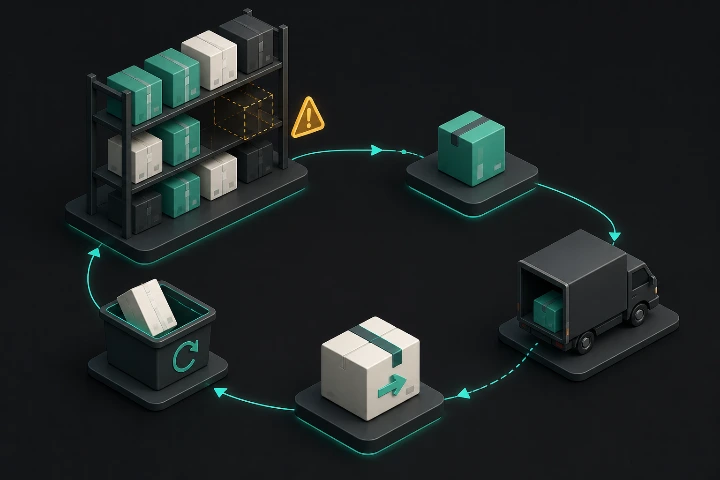
A simple order map reveals gaps before launch:
- A customer places an order.
- The store confirms the order and payment status.
- The order enters the fulfilment workflow.
- Available stock is checked.
- The order is picked and packed.
- The parcel is handed to a carrier.
- Tracking is sent to the customer.
- Delivery is confirmed or an exception is raised.
- Returns, replacements, or refunds follow the agreed process.
For each step, assign an owner and define what happens when the normal process fails. Typical exceptions include an incorrect address, stock-out, damaged item, delayed parcel, stalled tracking event, or wrong variant.

Map the order, tracking and returns flow before assigning operational ownership.
Plan returns before the first sale
Returns should not be an afterthought. Decide where customers send returned products, who reviews the item, which conditions qualify for a replacement or refund, how replacement stock is recorded, and how customers receive status updates.
The exact customer policy depends on the product and relevant requirements. A fulfilment partner can support the operational workflow, but the brand should approve the customer-facing policy.
Run a small launch test
Before committing to a larger launch, run a documented operational test using a small number of real or controlled orders. Check whether the correct SKU is selected, packaging instructions are followed, the shipping label is correct, tracking is created, inventory decreases accurately, and a return or replacement can be recorded.
A small test does not prove that every future order will operate perfectly. It helps expose missing instructions and unclear ownership while changes are still manageable.

Use a launch readiness map to confirm inventory, packaging, fulfilment and exception decisions.
Set a product-safety boundary
Fulfilment does not replace product-safety responsibility. Before selling a product in Australia, identify the requirements relevant to the product category and retain appropriate documentation. The ACCC’s guidance for selling safe products online is a useful starting point.
This article is general operational guidance. It is not a product-safety assessment, legal opinion, or certification.
Where supplier selection fits
Product sourcing and fulfilment are related, but they are not the same decision. For manufacturer and supplier due diligence, use our existing supplier-vetting guide for creator brands. Keep supplier selection, inventory handling, and customer delivery workflows explicit rather than treating them as one vague operational task.
Fulfilment launch checklist
- Choose the fulfilment model.
- Confirm inventory ownership and records.
- Finalise SKU, variant, and packaging instructions.
- Define order-routing and stock-out rules.
- Set the tracking, returns, and replacement workflow.
- Assign ownership for exceptions.
- Run a small operational test.
- Confirm product-specific safety and compliance documentation.
Next step
The right fulfilment model is the one that matches the product, customer expectations, and operating responsibilities clearly enough to manage normal orders and exceptions. If you want to map those decisions around a creator-led product launch, book a Creator Brand Feasibility Call with My Selection.
Related fulfilment guides
- How ecommerce fulfilment works: the order lifecycle
- How to choose an ecommerce fulfilment provider in Australia